A garage door that suddenly will not lift is rarely just inconvenient. A broken spring can leave a vehicle trapped, create an unsecured entry point, or stop loading and resident access at a commercial property. Broken garage door spring repair is a safety-focused service, not a problem to force through with the opener or a quick DIY adjustment.
The good news is that a trained technician can usually identify the issue quickly, explain the condition of the system, and recommend the appropriate repair. Until then, treating the door carefully helps prevent further damage to the opener, cables, tracks, and people nearby.
## Signs Your Garage Door Spring May Be Broken
The most common sign is a door that [will not open](https://ubsgarages.com/blog/why-wont-my-garage-door-open), even though the opener motor runs. You may hear the opener humming, see the chain or belt move, and find that the door lifts only a few inches before stopping. In some cases, the door remains fully closed and feels extremely heavy when disconnected from the opener.
A loud bang from inside the garage is another familiar warning sign. Garage door springs store significant tension, and a torsion spring can make a sharp noise when it breaks. Homeowners sometimes mistake it for something falling or hitting the garage door.
Other symptoms include a crooked door, loose or dangling cables, a door that opens unevenly, or a door that closes harder than usual. For [commercial overhead doors](https://ubsgarages.com/services/commercial-garage-door-services), operators may notice delayed movement, a door that will not stay in the open position, or a disruption to loading, vehicle, or tenant access.
Not every heavy or unresponsive door has a broken spring. Worn rollers, damaged tracks, cable problems, an opener issue, or a door that is binding can produce similar symptoms. That is why a professional diagnosis matters before any parts are replaced.
## What to Do When a Spring Breaks
If the garage door is closed, leave it closed whenever possible. Do not repeatedly press the wall button or remote in an attempt to make the opener lift the door. The opener is designed to move a balanced door, not carry the full weight of one with a failed spring. Continued use can strain the motor, damage gears, or pull cables out of position.
If the door is open when the problem occurs, keep people, vehicles, and equipment away from the opening. A door with a failed spring may not remain securely open. Do not stand beneath it or attempt to hold it in place while someone works around it.
Avoid pulling the emergency release unless a qualified technician advises you to do so. A disconnected door can be difficult to control, especially on heavier insulated residential doors and commercial overhead doors. If access is urgent, explain the situation when requesting service so the technician can help determine the safest next step.
For property managers and commercial operators, it helps to notify affected residents, staff, or tenants and route traffic away from the affected opening. A clear, temporary plan protects people while reducing unnecessary disruption to daily operations.
## Why Spring Repairs Require Professional Service
Garage door springs counterbalance the weight of the door. Torsion springs are typically mounted above the door opening on a metal shaft. Extension springs run along the horizontal tracks on either side of the door. Both types operate under high tension.
Replacing a spring involves more than installing a new part. The technician needs to confirm the door weight, spring type, size, cycle rating, cable condition, shaft and bearing condition, and overall balance. A spring that is not correctly matched or adjusted can cause the door to run unevenly, wear out the opener prematurely, or create an ongoing safety concern.
A professional repair also provides an opportunity to inspect components affected by the failure. When a spring breaks, cables may loosen, drums may shift, and rollers or hinges may reveal existing wear. Addressing related issues at the same appointment can prevent a second service call soon after the first repair.
At UBS Garage Door Repair, technicians explain what failed, what needs immediate attention, and what can be planned for later. The goal is not to complicate a straightforward repair. It is to restore safe, smooth operation with a clear understanding of the work being performed.
## Should You Replace One Spring or Both?
Many residential garage doors use a pair of torsion springs. When one breaks, the second may still be intact, but it has typically completed the same number of cycles and may be approaching the end of its service life.
Replacing both springs at the same time often makes practical sense because it restores balanced lifting support and reduces the chance of another breakdown in the near future. It can also avoid a separate service visit and another period when the garage door is out of service.
There are exceptions. A door may have springs of different ages because of a previous repair, or the system may be designed differently. The right choice depends on the condition of both springs, the door’s weight and use, and the customer’s plans for the door. A technician should explain the trade-off clearly rather than assume one answer fits every property.
## How Long Do Garage Door Springs Last?
Spring life is measured in cycles, with one cycle meaning the door opens and closes once. Standard springs may be rated for roughly 10,000 cycles, while higher-cycle options can last longer. Actual lifespan varies based on door weight, daily usage, maintenance, weather exposure, and whether the door has been operating out of balance.
For a homeowner who uses the garage door a few times each day, a spring may last several years. A busy multifamily garage, warehouse bay, retail receiving area, or industrial facility can use up spring cycles much faster. In those settings, planned maintenance is often more cost-effective than waiting for a failure to interrupt operations.
Chicago-area weather can also expose garage door systems to moisture, temperature swings, and road salt carried into garages. These conditions do not always cause a spring to break, but they can accelerate wear on cables, rollers, bearings, and other moving parts. Regular inspection helps identify those issues before they become an access problem.
## Preventing Another Unexpected Failure
Springs eventually wear out, but routine care can reduce unnecessary stress on the entire door system. A properly balanced door should move smoothly without the opener struggling, jerking, or making excessive noise. If the door gets louder, slows down, reverses unexpectedly, or looks uneven, schedule service before it stops working altogether.
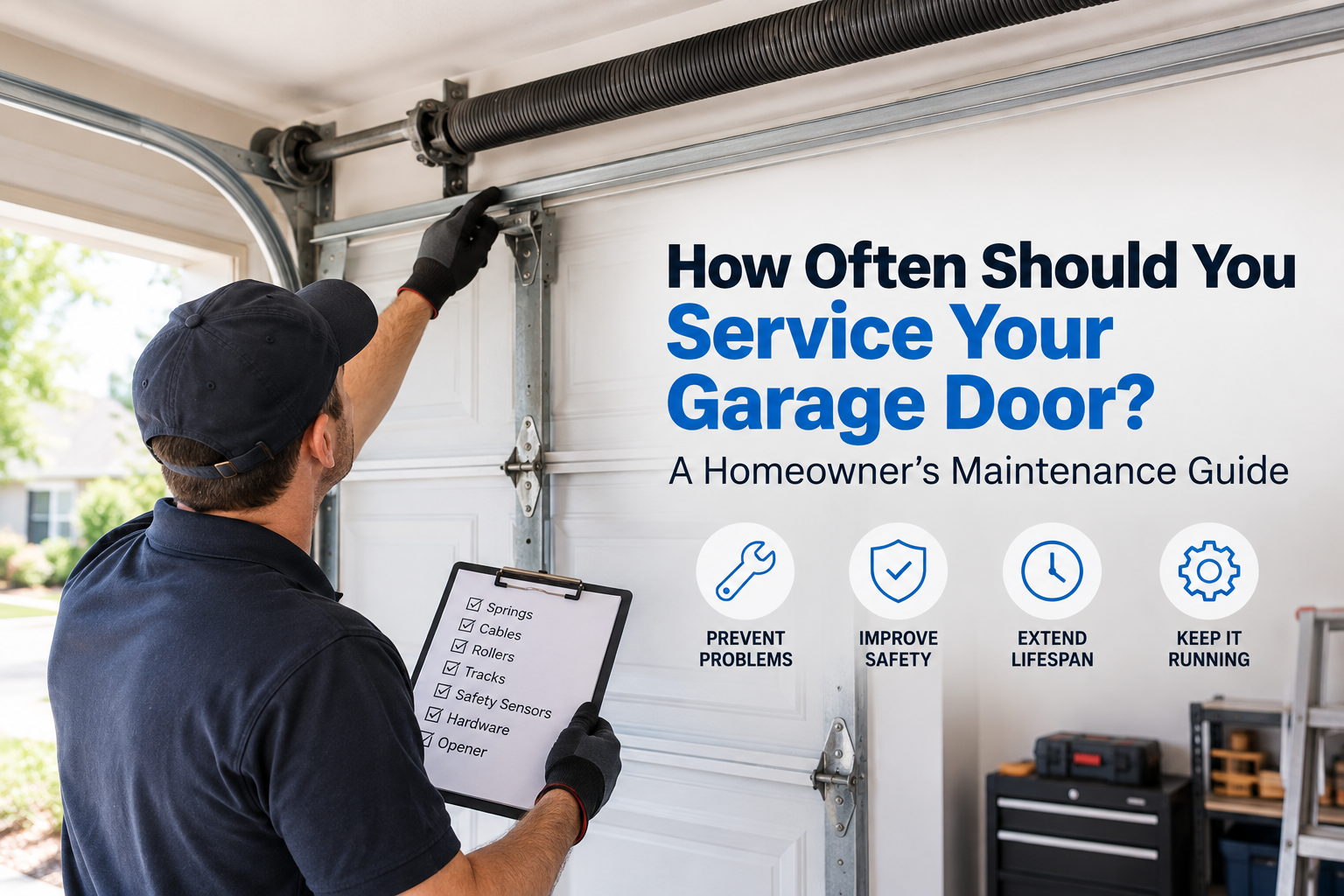
[Preventive maintenance](https://ubsgarages.com/services/garage-door-service-maintenance) typically includes checking spring condition, cable tension, rollers, hinges, tracks, fasteners, safety sensors, opener function, and door balance. It is especially useful for commercial properties where a single nonfunctioning door can affect deliveries, security, parking access, and schedules.
Do not apply random lubricants or attempt to adjust spring hardware as a maintenance shortcut. Some lubrication may be appropriate for specific moving components, but spring adjustment and cable work should remain with trained professionals. The safest maintenance decision is early service when the door begins showing changes in performance.
## Get the Door Operating Safely Again
A broken spring does not always happen at a convenient time, but the response can be straightforward: stop using the door, protect the area, and arrange a professional inspection. A properly repaired and balanced garage door should open smoothly, close securely, and place less strain on the opener.
If your door is heavy, stuck, noisy, or no longer responding as it should, describe the symptoms when you request service. Clear information helps the technician arrive prepared and helps get your home, facility, or property access moving again with minimal disruption.
Need Garage Door Service?
If you are dealing with a garage door problem now, UBS can help with repair, service and installation for residential and commercial properties.